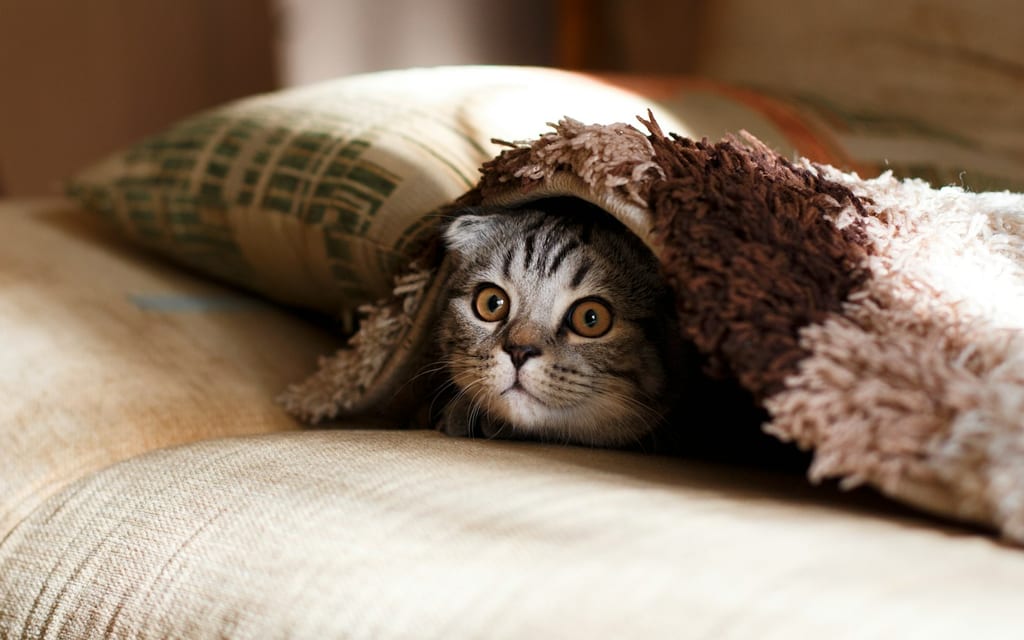
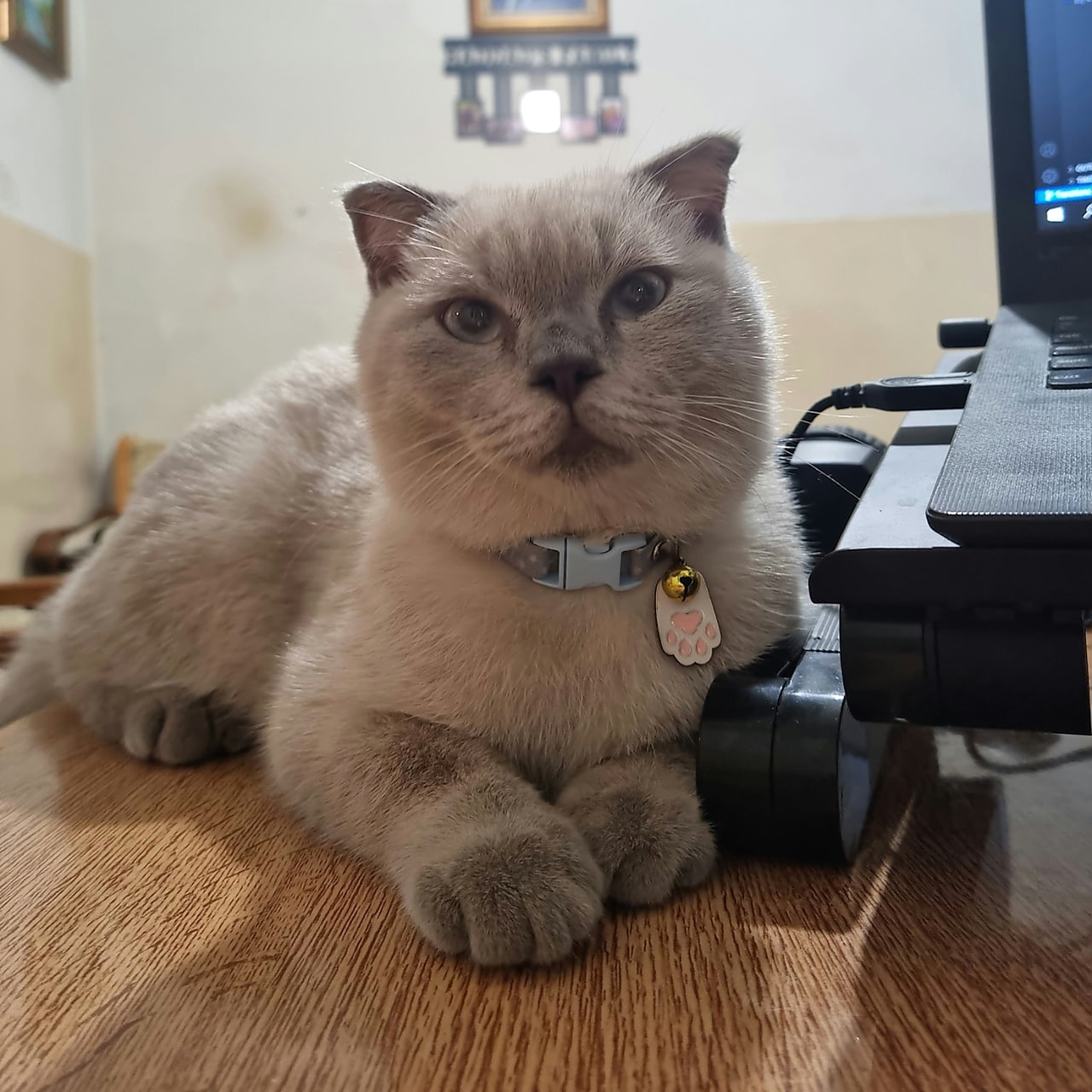
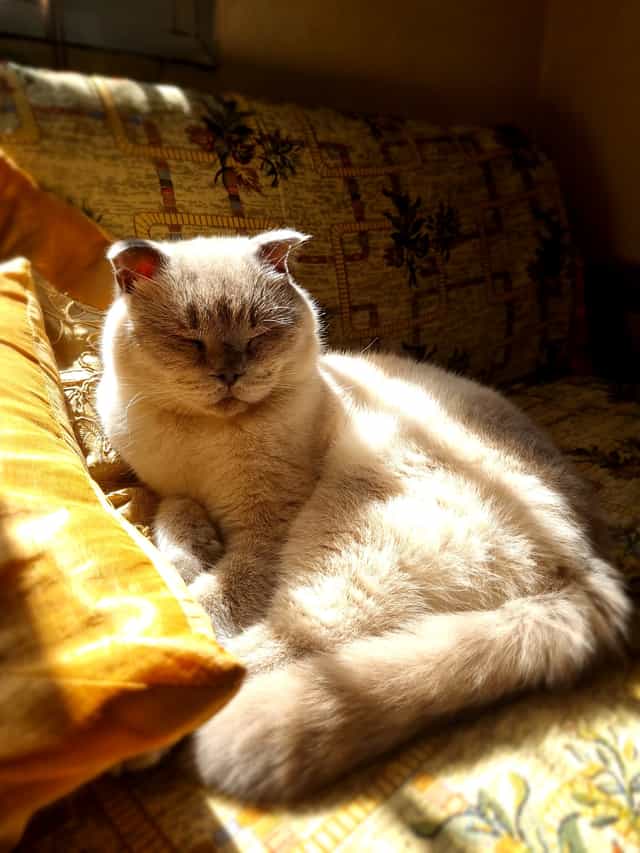
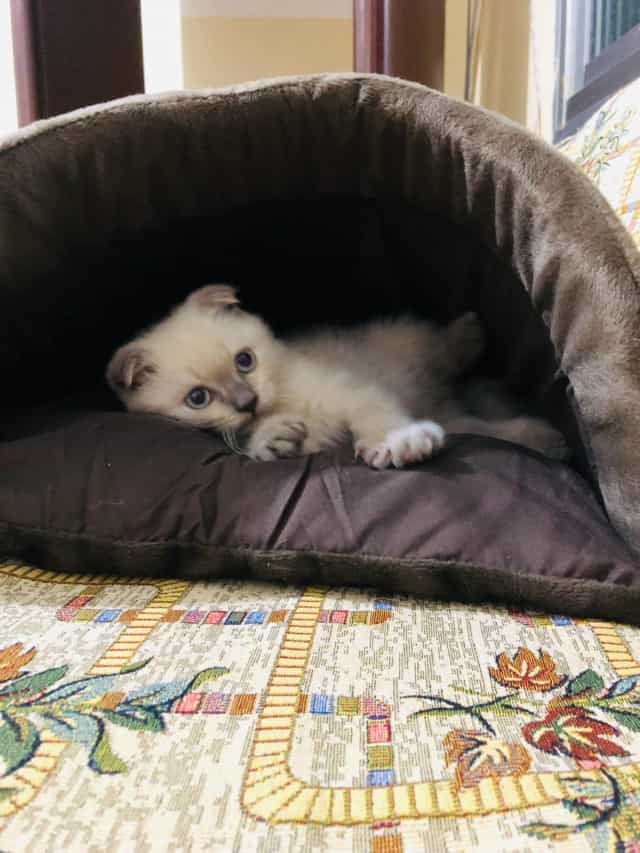
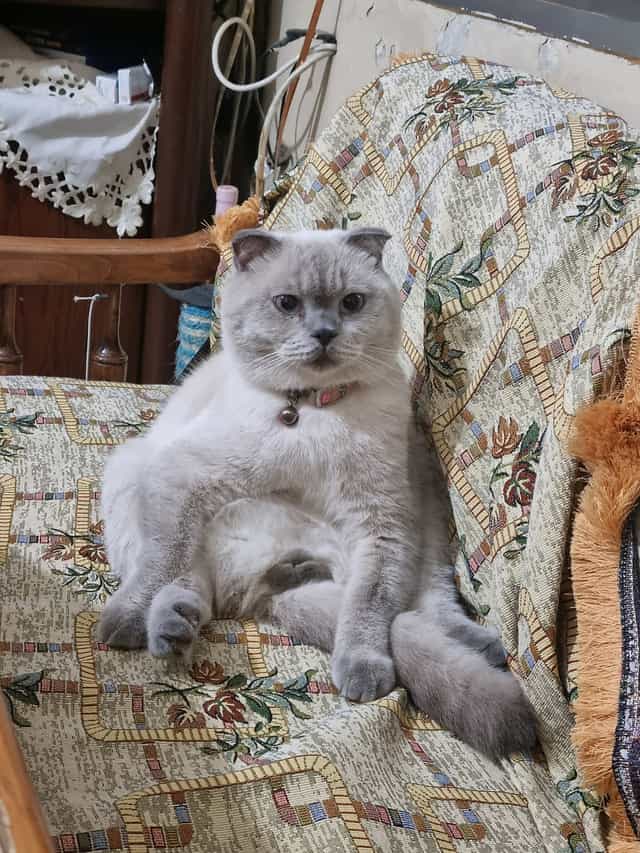
Lotus came home in June 2021, about two and a half months old. A veterinarian later described him as a Scottish Fold–Siamese mix, but his parents and pedigree are unknown.
He loves safe sleeping spots, supervising meals and taking what he considers enormous trips just outside the apartment door.
Came home
June 2021
Age then
About 2½ months
Breed
Vet-described Fold–Siamese mix
Weight now
About 3.2–3.3 kg
Pedigree
Unknown
How we met
Getting Lotus was completely unplanned.
My then-girlfriend and I were walking when she suggested looking inside a random pet shop. Many cats were meowing, but Lotus was quiet and frightened in his own cage.
She noticed him first and wanted to get him out of there. We took him home that day. I remember paying about $150 in total for Lotus, a carrier, food, litter supplies and a few basics.
He was already clean and vaccinated. We do not have pedigree records. Later, a veterinarian said he appeared to be a Scottish Fold–Siamese mix.
Owner memory—not medical proof
As a kitten, I remember Lotus running, jumping high, chasing things and exploring without obvious hesitation. The old photos support the story of that period; they do not prove that his joints were medically normal.
Lotus still has active moments and genuine bursts of energy.
The story as I remember it
Only June 2021 is a firm date. The later stages use approximate ages and sequence because I do not want to invent dates I cannot verify.
From the beginning to today
Scroll through the chapters
June 2021
01 / 10
Lotus came home
He was about two and a half months old. This is the one firm date in the early timeline.
It started with an unplanned stop at a pet shop. While other cats were meowing, Lotus was quiet and frightened in his own cage. My then-girlfriend noticed him first; we took him home that same day.
Kittenhood
02 / 10
Movement looked easy
I remember running, high jumps, chasing and exploring without obvious hesitation. That is an owner memory, not a joint assessment.
He chased things, explored and jumped high. I also remember him being more comfortable in my arms. Those memories matter to our story, but old photos cannot tell us whether his joints were medically normal.
Around age 2
03 / 10
Strength seemed to change
His movement and tolerance of handling began to look different to me. The timing is approximate.
The changes became part of ordinary moments: pausing near an edge before jumping, finding jumping down harder, and allowing less handling of his paws and legs. I noticed them at home; they are observations rather than a pain score.
Around age 2
04 / 10
A scan is remembered
I remember veterinary imaging, but the type, date and report are not available. FelisFold does not turn that memory into a diagnosis.
I remember the vet showing me images where his limbs looked unusually shaped, almost zig-zagged. Without the original report, I cannot verify what the images showed or turn that recollection into a confirmed diagnosis.
Later
05 / 10
He was neutered
The exact date is not documented here. I did not notice a clear improvement in the movement concerns afterward.
A veterinarian had suggested neutering around age two and feeding the cats separately. We followed the neutering advice. The date remains unknown, and the absence of an obvious change to me does not tell us what caused his movement difficulties.
Later
06 / 10
Kinder joined the home
Lotus seemed deeply affected by sharing his home and attention. A vet visit and more deliberate one-to-one attention followed.
His physical problems had already begun before Kinder arrived. I deliberately gave Lotus more one-to-one attention and took him to the vet. I do not remember the exact treatment, so that part of the record stays open.
With time
07 / 10
They found their rhythm
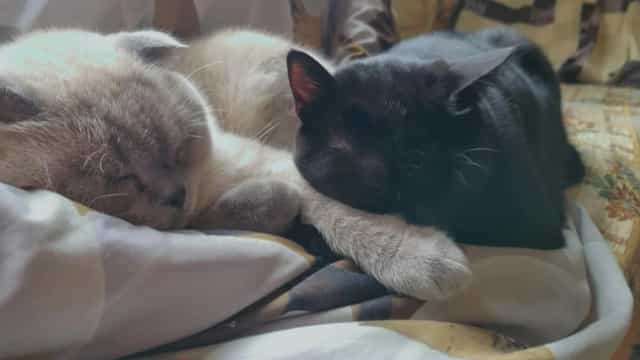
Lotus and Kinder became close. They rest together, play-fight and he still runs after her.
Sharing a home became something gentler. Their shared naps and playful chases are part of his life too. A playful moment is real, but it does not prove that nothing hurts.
Around age 3
08 / 10
Vomiting began
Recurrent episodes became another concern to track separately from movement. The timing is approximate and the cause is not established.
There are still quieter periods. The food often looks relatively undigested, which is why I do not assume every episode is true vomiting rather than regurgitation. The pattern needs veterinary interpretation, not a guess from a photograph.
More recently
09 / 10
Meals became more deliberate
Smaller, more frequent meals and simpler food combinations appeared to help. That observation does not identify the cause.
Large portions and mixing different foods close together seemed harder for him. During a period of plain cooked chicken, I noticed much less vomiting. That experience is not a complete diet recommendation for another cat.
Today
10 / 10
Good days and hard days
He weighs about 3.2–3.3 kg. Movement varies, jumping down is harder and his tail seems partly stiff—yet he still runs, plays and grooms.
He still sleeps beside me while I work, finds quiet resting places, scratches, grooms and uses his litter box. Some days are harder than others. The curious cat I brought home is still here, and we are still learning together.
Our story is still being written.
Then → now
A change over time, not a ‘healthy versus sick’ label.
Then — what I remember
During kittenhood, movement problems were not obvious to me.
●Ran and played normally
●Jumped high without noticeable hesitation
●Chased things and explored
●Tolerated being held more comfortably
Now — daily life
Every day is different, and jumping down is especially hard.
●Moves closer to an edge and pauses before jumping
●Both front and rear limbs seem affected to me
●His tail appears partly stiff and he dislikes it being touched
●Still runs after Kinder, grooms and has genuine good days
Life beyond symptoms
Lotus is still Lotus.
He hides in quiet places, sleeps beside me while I work, scratches, grooms, uses the litter box and still has bursts of energy. A difficult day does not erase the good ones—and a playful moment does not prove that nothing hurts.
Kinder changed his world, then became part of it.
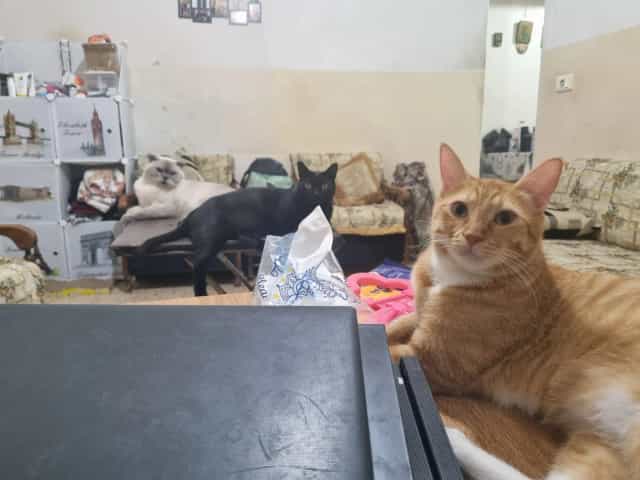
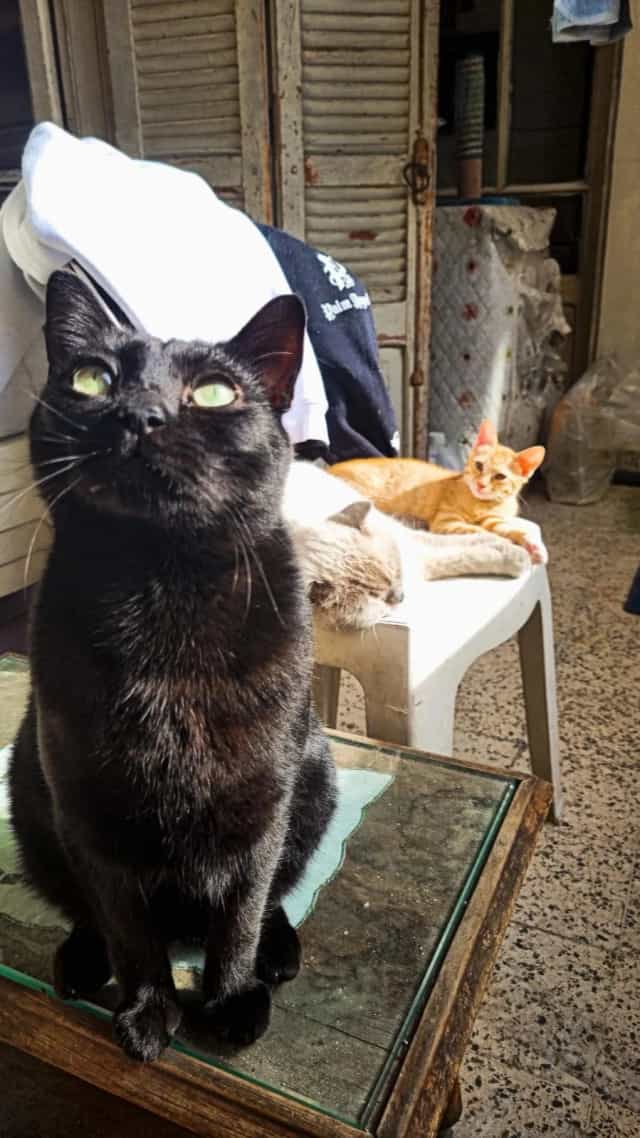
Kinder is our black cat; Biscuit is the orange cat. Kinder joined after Lotus’s physical problems had begun. His behaviour changed noticeably and he seemed deeply affected by sharing his home and attention. I took him to the vet and deliberately gave him more attention. The exact treatment is not remembered. Over time, Lotus and Kinder became close; they play-fight and he still runs after her.
The three of themBiscuit is the orange cat in front. Kinder is the black cat, with Lotus resting behind.Lotus & KinderLotus resting beside Kinder, our black cat.
My care notebook
What I tried, what changed and what is still unknown.
These are honest owner notes, not a treatment plan for another cat. Medical decisions and medicine doses belong with a veterinarian who has examined the individual cat.
What I’ve noticed
Jumping down appears harder than jumping up
He may hesitate for several seconds before committing
After 5–10 seconds of being held, he may try to escape
He rarely permits much paw or leg handling
His mobility changes noticeably from day to day
Real moments
A life documented, not staged.
I chose a small set of photos that adds something different: family, grooming, eating, rest and personality. Videos will be added only when the real Lotus files are supplied, reviewed and captioned.
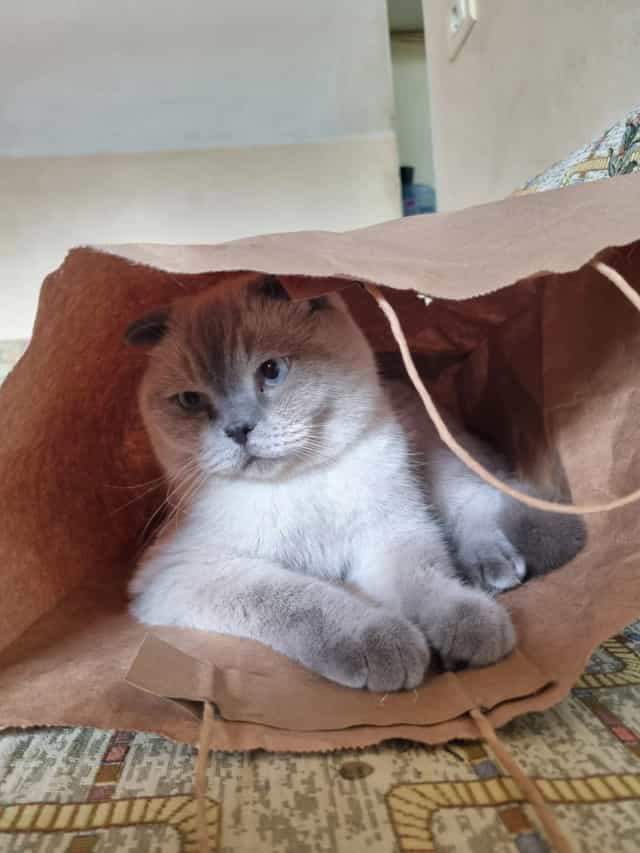
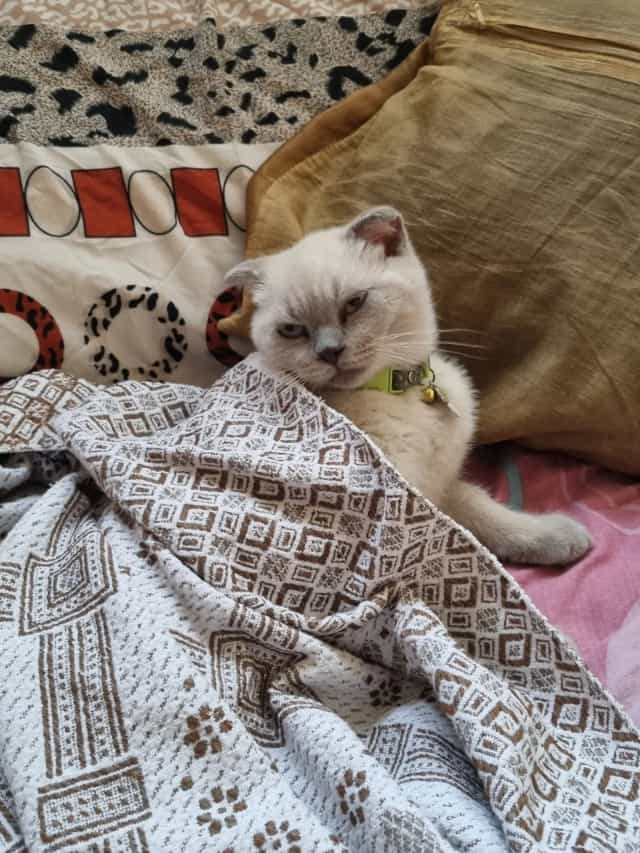
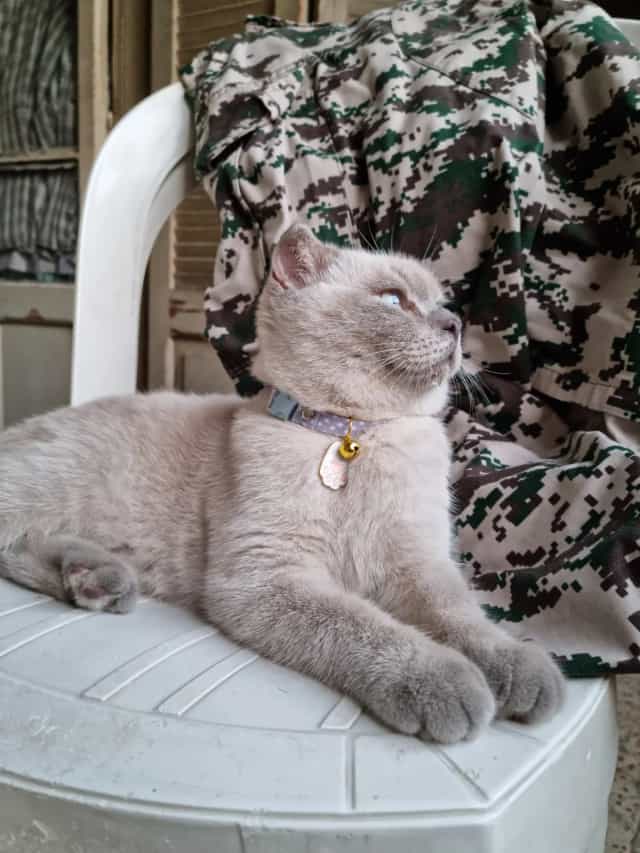
Still completely LotusHealth questions are part of his life, not his whole personality.Meet KinderKinder, our black cat. Biscuit is on the chair behind her.Bag inspectorLotus has found a spot inside a paper bag.A corner of the sofaLotus tucked between the cushions.Watching the roomLotus keeping an eye on things from a white chair.
Why FelisFold exists
One cat’s story. Better questions for many.
Lotus’s health questions pushed me to research more carefully. FelisFold keeps three things separate: what I observed, what veterinary evidence says, and what only a veterinarian can decide for an individual cat.
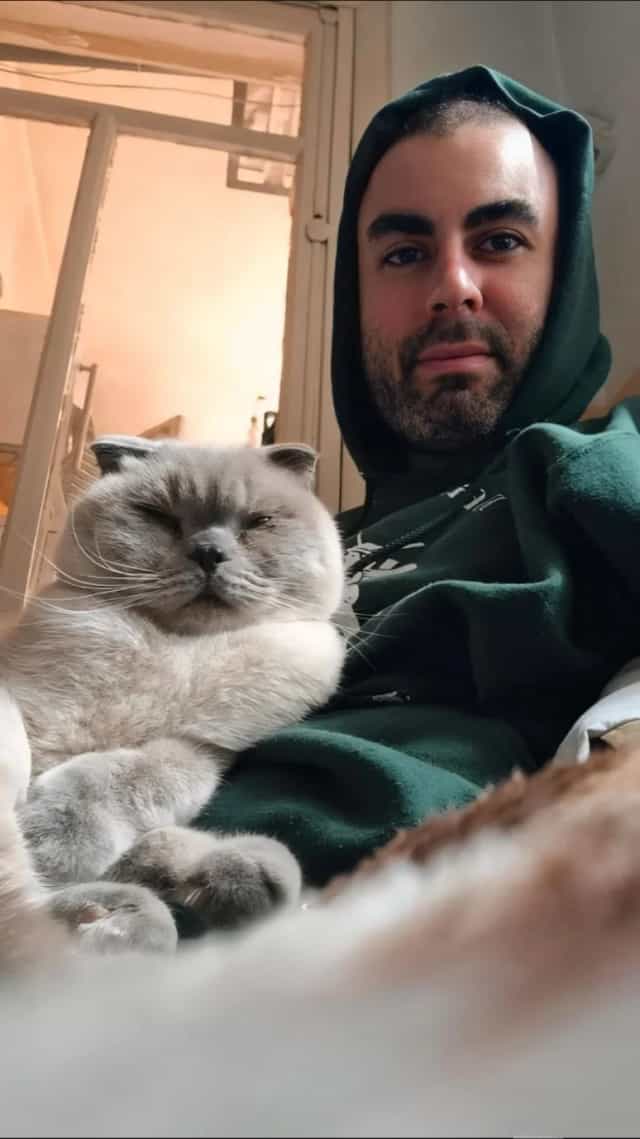
A quiet moment together at home.
Other homes, other cats
We're sharing the experience.
A couple of stories from people making room for their cats. These are their experiences, with links to read them in full.
Marc-André & Iain · Katzenworld
Nubia has three legs. And plenty of personality.
Her people introduce Nubia as a noisy, determined member of the family. Their everyday account leaves room for her character alongside her disability.
Mary and Kate made a foster room with places to play, rest and watch the window. It's an example of adapting a home around the cats who live there; Lotus would need easier routes than climbing kittens.